Viral clearance validation is a critical part of the viral safety strategy for biological products. It demonstrates, under controlled scaled-down conditions, whether defined downstream manufacturing steps can effectively remove or inactivate potential viral contaminants.
This article explains what viral clearance validation is, why it is required, how it is performed, the most common viral clearance and inactivation methods used in downstream processing, key regulatory considerations, and how validation expectations differ between IND and BLA stages.
Viral safety is a critical consideration throughout the lifecycle of biological products such as monoclonal antibodies, recombinant proteins, and vaccines.
Production cell lines may carry endogenous viruses, while raw materials and manufacturing processes may introduce adventitious viruses. For this reason, viral clearance validation studies are an essential part of demonstrating that a manufacturing process can consistently control viral risks and support product safety.
Viral clearance validation is a study performed in a dedicated laboratory outside the routine manufacturing environment using a scaled-down model of the actual production process. A defined amount of model virus is deliberately spiked into the starting material or process intermediate. The material is then processed under conditions that simulate the actual manufacturing parameters and controls.
The residual amount of infectious virus is measured before and after the process step to quantitatively evaluate the capability of that step to remove or inactivate viruses.
In practical terms:
Viral clearance validation deliberately challenges a manufacturing process with virus to determine how much viral contamination the process can actually eliminate.
This approach provides direct evidence of the viral clearance capacity of downstream manufacturing operations.
According to regulatory frameworks such as ICH Q5A(R2), Evaluation of Viral Safety of Biotechnology Products Derived from Cell Lines of Human or Animal Origin, viral safety is generally established through three complementary strategies:
Source control: Select low-risk cell substrates and raw materials and perform appropriate viral screening.
In-process testing: Test the product for viruses at appropriate stages of manufacturing.
Process validation: Demonstrate that downstream purification processes can remove or inactivate viruses.
The first two strategies are primarily designed to detect or exclude viral contamination.
Viral clearance validation serves a different purpose: it demonstrates the virus-reduction capability of the manufacturing process itself.
Testing alone cannot provide complete assurance of viral safety because analytical methods have detection limits, and unknown or unexpected viruses may escape routine testing. Viral clearance validation therefore provides an additional layer of protection by demonstrating that the manufacturing process has the capacity to control potential viral contamination.
Viral clearance strategies used in downstream bioprocessing can generally be divided into physical removal, physical or thermal inactivation, chemical inactivation, and chromatographic separation.
Category | Typical Method | Mechanism | Main Viral Target |
Physical removal | Nanofiltration (20–50 nm) | Removes viral particles primarily through size exclusion | Small non-enveloped viruses |
Physical treatment | Heat treatment | High temperature disrupts viral structure | Lipid-enveloped viruses |
Chemical inactivation | Low-pH incubation | Disrupts the structure of enveloped viruses | Enveloped viruses |
Chemical inactivation | Solvent/detergent (S/D) treatment | Dissolves the viral lipid envelope | Enveloped viruses, including HIV and HCV |
Chromatographic separation | Affinity chromatography / ion-exchange chromatography | Separates viruses based on binding and physicochemical characteristics | Depends on the specific chromatography mode |
A typical viral safety strategy for a monoclonal antibody downstream process may include:
Protein A affinity chromatography → low-pH viral inactivation → anion-exchange chromatography → nanofiltration
Using multiple process steps with different mechanisms provides several independent layers of viral safety protection.
Viral clearance validation programs should be designed with applicable regulatory requirements in mind, including guidance and expectations from:
· ICH Q5A(R2)
· U.S. FDA
· EMA
· NMPA
· Relevant technical guidelines for viral safety control of biological products
These frameworks require manufacturers to assess potential sources of viral contamination, use appropriate model viruses in process validation studies, and evaluate the overall virus-reduction capability of the manufacturing process.
Viral safety strategies also emphasize the use of orthogonal virus clearance steps, meaning that different process steps should remove or inactivate viruses through different mechanisms.
Viral safety evaluation data are also required to support the development and registration of biological products, including products entering clinical development.
Model viruses should represent a broad range of viral characteristics so that the validation study can challenge the manufacturing process appropriately.
A model virus panel may include viruses with differences in:
· Envelope: enveloped vs. non-enveloped
· Genome: DNA viruses vs. RNA viruses
· Particle size: large viruses vs. small viruses
· Physicochemical resistance
· Relevance to the production system
For example:
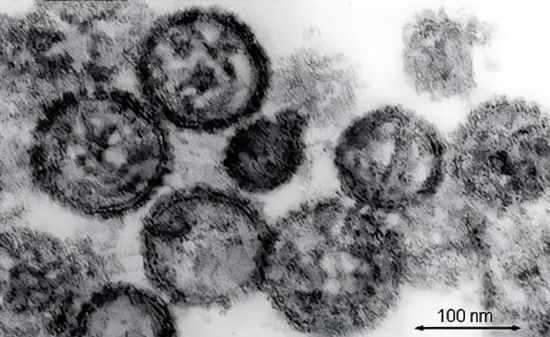
· Large viruses such as herpesviruses may be approximately 150–200 nm
· Small viruses such as Minute Virus of Mice (MMV) may be approximately 20 nm
Commonly used model viruses include:
Model Virus | Characteristics / Typical Use |
X-MuLV | Retrovirus commonly used to represent endogenous retroviral risk |
MMV | Small parvovirus used to represent resistant adventitious small viruses |
PRV | Pseudorabies virus |
Reovirus Type 3 (REO3) | Non-enveloped reovirus used as a model virus |
The virus panel should provide sufficient diversity to evaluate the robustness of the overall viral clearance strategy.
An effective downstream viral safety strategy should include virus-reduction steps based on different mechanisms of action.
For example:
Low-pH inactivation + nanofiltration
These two steps are orthogonal because:
· Low-pH treatment provides chemical inactivation
· Nanofiltration provides physical removal
Using orthogonal mechanisms reduces the risk that failure or insufficient performance of a single viral clearance mechanism will compromise the overall viral safety strategy.
The performance of a virus clearance step is commonly expressed as a Log Reduction Value (LRV).
The basic calculation is:
LRV = log10 (total virus before treatment / residual virus after treatment)
Single-Step LRV | Interpretation |
≥ 4 log | Considered an effective virus-removal step |
1–3 log | Indicates partial virus clearance capability |
< 1 log | Generally not counted toward overall virus clearance capability |
LRV provides a quantitative way to compare the virus-reduction performance of different downstream processing steps.
The overall viral clearance capability of the manufacturing process can then be evaluated using the results generated from individual validated steps.
At the BLA stage, viral clearance validation should evaluate process performance under defined worst-case conditions within the established process parameter ranges.
The specific worst-case parameters depend on the mechanism of the virus clearance step.
For low-pH viral inactivation, worst-case conditions may include:
· Highest allowable pH
· Lowest allowable temperature
· Shortest allowable incubation time
For solvent/detergent treatment, worst-case conditions may include:
· Lowest allowable temperature
· Lowest allowable detergent concentration
· Shortest allowable incubation time
For chromatography steps, worst-case conditions may include:
· Aged resin or resin approaching the end of its defined lifetime
· Highest process loading
· Fastest flow rate
Evaluating these conditions helps demonstrate that the virus clearance step remains effective across the intended operating range rather than only under nominal process conditions.
The scope and depth of viral clearance validation generally increase as a biological product progresses from clinical development toward commercial registration.
Development Stage | Validation Depth | Process Conditions | Virus Panel |
IND | Preliminary validation | Normal process parameters | At least 2 relevant viruses |
BLA | Comprehensive validation | Worst-case conditions | 4 model viruses |
At the IND stage, the primary objective is to generate sufficient viral safety evidence to support clinical development. Validation therefore focuses on an initial assessment of the virus clearance capability of the manufacturing process under representative operating conditions.
At the BLA stage, the process is expected to be much more mature. Viral clearance studies therefore require a more comprehensive assessment, including appropriately selected model viruses and evaluation under defined worst-case process conditions.
The validation strategy should therefore evolve together with the development stage, process understanding, and regulatory submission requirements.

Viral clearance validation is a highly specialized area that requires more than simply generating a test report.
Selecting an experienced and appropriately qualified third-party laboratory can therefore help improve study execution and reduce regulatory and project risks.
BRC Biotechnology focuses on viral safety testing and viral clearance validation for biological products. Its capabilities described in the source material include:
· A diverse, high-quality model virus bank
· Experience supporting more than 150 domestic and international IND and BLA submission projects
· A specialized viral clearance team capable of independently performing different types of chromatography and virus-filtration processes
Viral clearance validation should not be viewed as a standalone laboratory test. It is a systematic program that connects process development, viral safety risk control, regulatory strategy, and submission timelines.
For developers of antibodies, cell and gene therapies, recombinant proteins, vaccines, and nucleic acid drugs, a well-designed viral clearance strategy provides essential evidence that the manufacturing process can consistently support product safety and quality.
BRC Biotechnology — supporting the safety and quality of biological products through professional testing and validation services.