Chinese hamster ovary (CHO) cells are widely used cell substrates for the production of biological products. For decades, CHO cells have been extensively cultured and applied in molecular biology and biopharmaceutical development, particularly in the production of therapeutic antibodies.
According to ICH guidelines, biosafety testing can generally be considered from four key perspectives: Identity, Purity, Safety, and Potency. Among these, Safety is a major focus of biosafety testing because it is directly related to the safety of final products and biological therapeutics.
With reference to guidelines and requirements from the International Council for Harmonisation (ICH), the U.S. Food and Drug Administration (FDA), the European Pharmacopoeia, the Chinese Pharmacopoeia, and the United States Pharmacopeia, cell safety testing is required throughout different stages of the manufacturing process, including the Master Cell Bank (MCB), Working Cell Bank (WCB), and End-of-Production Cells (EOPC).
Currently, two major approaches are commonly used for cell safety testing: broad-spectrum screening assays and specific assays.
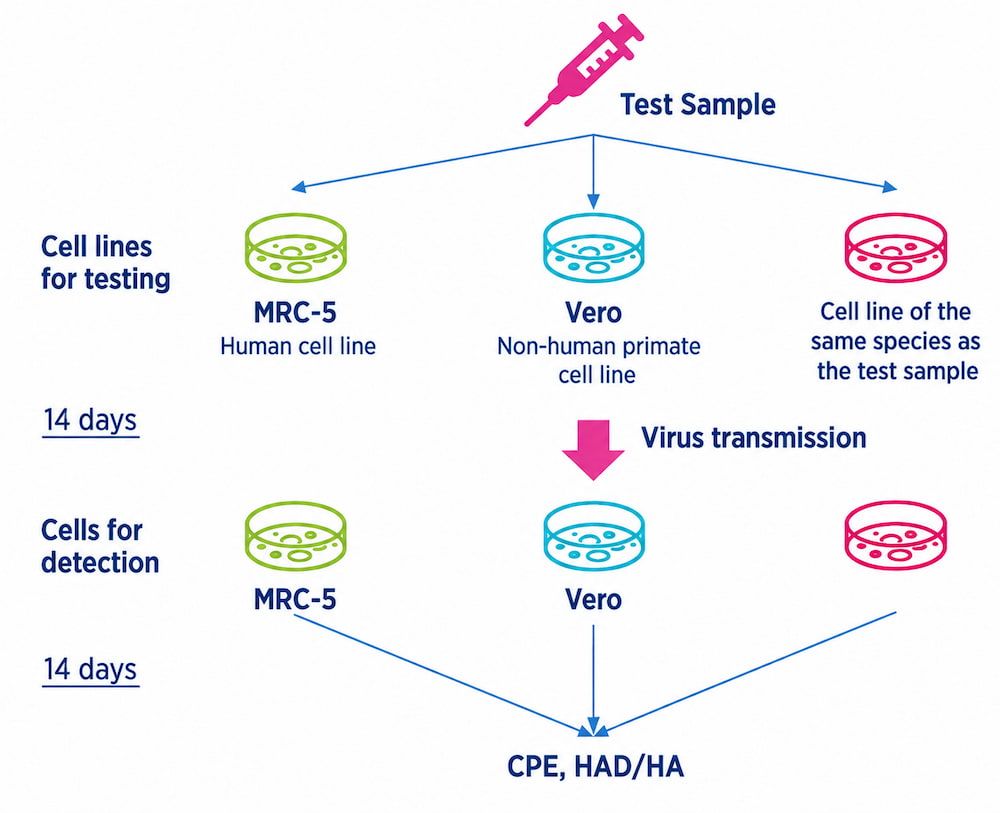
Broad-spectrum screening is designed to detect contamination by infectious adventitious viral agents using in vitro cell culture assays and in vivo animal assays.
For in vitro testing, at least three types of indicator cells are generally used, including:
Human diploid cells
Non-human primate cells
Cells originating from the same species as the test sample
The endpoints of these assays typically include the observation of cytopathic effects (CPE), hemagglutination, and/or hemadsorption.
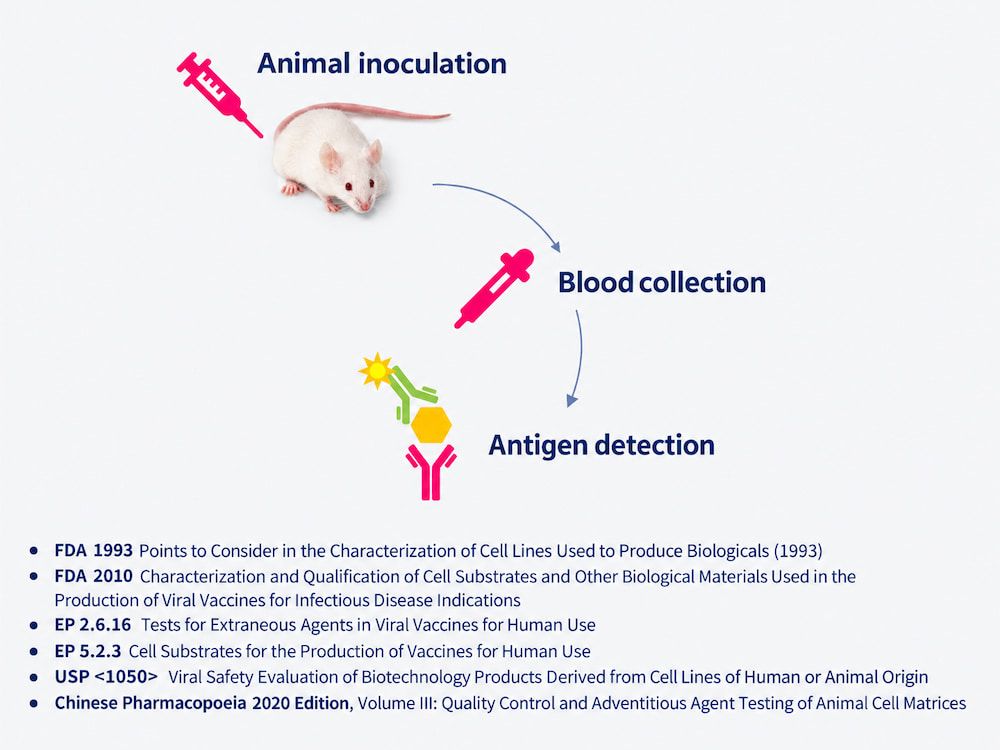
In addition, the Chinese, U.S., and European pharmacopoeias, as well as FDA and WHO guidance, include requirements or recommendations for the use of in vivo animal assays for adventitious virus screening.
Commonly used test systems include:
Suckling mice
Adult mice
Embryonated chicken eggs
Test samples may be administered through different inoculation routes, followed by observation of animal survival, clinical abnormalities, or other relevant endpoints to evaluate potential viral risks.
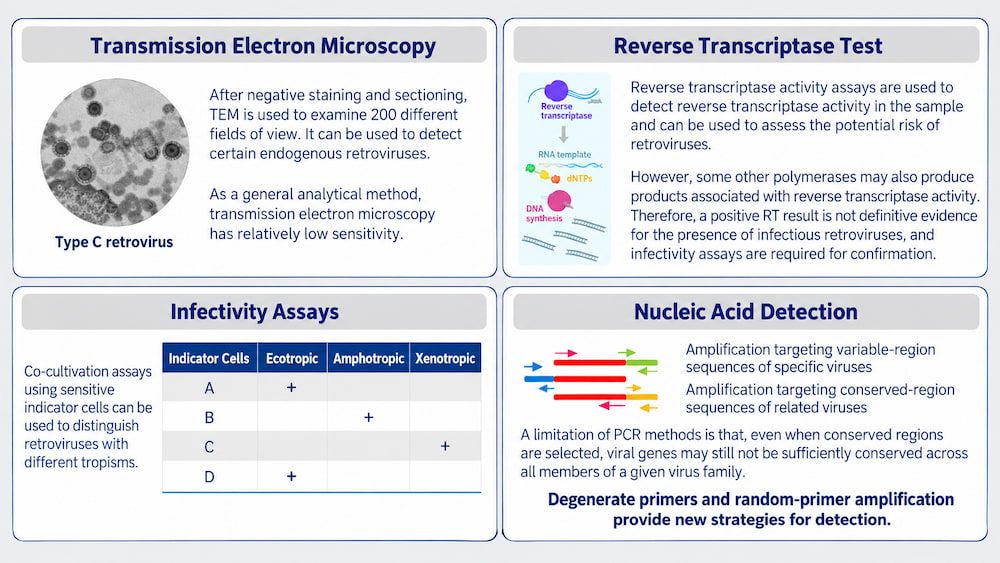
In addition to common infectious adventitious viruses, retroviral contamination requires particular attention.
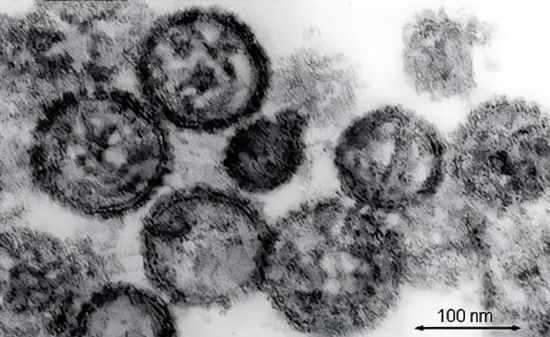
All vertebrate and insect cells may contain endogenous or genetically acquired retroviral sequences. These sequences can become integrated into host chromosomal DNA in the form of proviruses.
Such sequences may remain silent, may be expressed, or may be transcribed into mRNA. In some cases, the mRNA can be translated into viral proteins, resulting in the formation of viral particles or virus-like particles.
In many cases, these particles are replication-incompetent. Examples include endogenous avian retroviruses and gamma-retrovirus-like particles associated with CHO cell lines. In other cases, such as Xenotropic Murine Leukemia Virus (X-MuLV), retroviruses may be capable of infecting and replicating in cells from other species, including human-derived cells.
Retrovirus testing may be performed using methods such as:
In vitro indicator cell assays
Transmission Electron Microscopy (TEM)
Reverse transcriptase activity assays
Nucleic acid-based testing
Because CHO cells are derived from Chinese hamster ovary tissue, the risk of contamination by rodent-specific viruses should also be carefully evaluated.
According to regulatory requirements, antibody production tests have historically been used for the detection of rodent-specific viral agents.
ICH Q5A(R1) summarizes viral agents that can be detected using mouse, hamster, and rat antibody production tests. ICH Q5A(R2) further indicates that nucleic acid amplification techniques may be applied to the detection of species-specific viruses.
The Chinese Pharmacopoeia 2020 Edition, Volume III, also describes the use of species-specific real-time PCR (qPCR) methods for the detection and identification of specific viral agents.
Historically, many cell culture systems have been exposed to, or have used, raw materials of porcine or bovine origin. Therefore, specific testing strategies may be required to assess the risk of contamination by viruses associated with these animal-derived materials.
For example, relevant U.S. Code of Federal Regulations requirements describe testing approaches involving co-culture of test samples with susceptible indicator cells for the detection of porcine- or bovine-derived viral contaminants.
Following co-culture, the presence of specific viruses may be evaluated using methods such as immunofluorescence.
In certain testing strategies, the test sample is incubated with susceptible cells for up to 21 days, after which endpoint analyses such as immunofluorescence assays and hemadsorption tests are performed to identify potential viral contamination.
Adventitious agents may be introduced through cell substrates, raw materials, or during cell culture and manufacturing processes. As a result, the biosafety of production cell lines is a critical consideration throughout biologics development and manufacturing.
Different testing strategies are available for viral safety assessment, and analytical methods continue to evolve.
In response to regulatory requirements, testing laboratories are continuously introducing new technologies and improving assay sensitivity. A robust testing strategy should not only meet applicable regulatory expectations, but also ensure that analytical methods are practical, accessible, sensitive, and suitable for their intended use.
BRC Biotech (Shanghai) Co., Ltd. was established in 2022 and is located in the FTZ No. 1 Life Sciences Industrial Park within the Shanghai Pilot Free Trade Zone.
BRC Biotech operates approximately 6,000 m² of testing laboratories, business facilities, and training centers designed to meet cGMP and Biosafety Level 2 (BSL-2) standards.
We are committed to providing professional and compliant testing and analytical services across fields including:
Cell and gene therapy
Therapeutic antibodies
Vaccines
Nucleic acid therapeutics
Our capabilities cover biosafety testing, analytical method development, target validation and evaluation, as well as related testing reagent products.
As your biosafety testing partner, BRC Biotech is committed to delivering internationally aligned, high-quality local services to support the safety and development of biopharmaceutical products in China.
GMP cell banking and cell bank characterization
Drug substance and drug product testing services
Customized product testing and analytical method development
GMP-grade biological sample storage services
Product quality and regulatory compliance consulting
In our next article, we will continue exploring biosafety testing strategies for CHO cells.