Chinese hamster ovary (CHO) cells are among the most widely used mammalian cell lines for the production of monoclonal antibodies (mAbs) and recombinant proteins. CHO production cell lines are typically established by transfecting expression vectors into host CHO cells. The cell line development process generally includes vector construction, transfection, monoclonal screening, and the establishment of Master Cell Banks (MCBs) and Working Cell Banks (WCBs), as illustrated below.
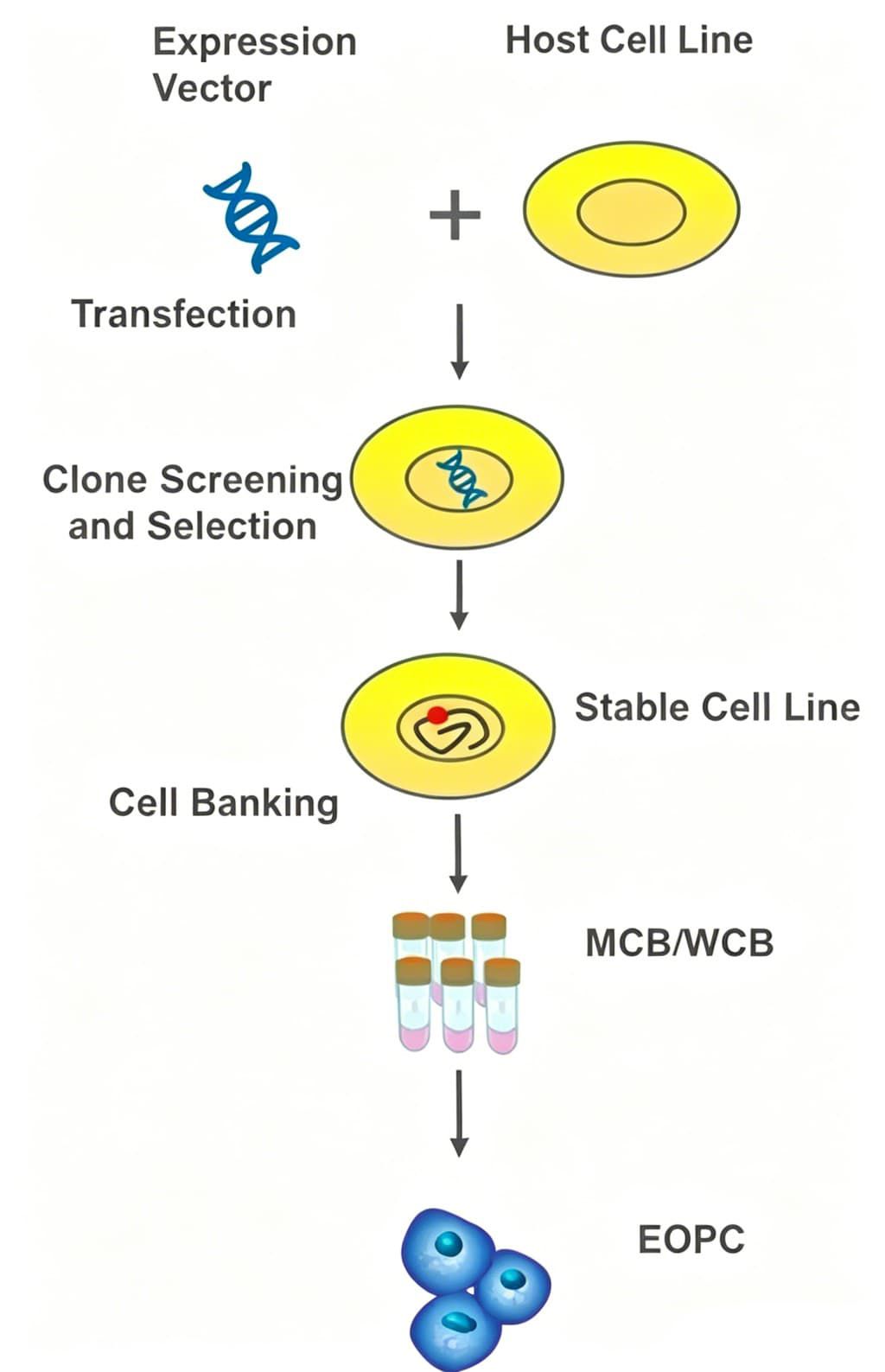
During subsequent cell culture and production processes, genomic events such as deletions, rearrangements, and point mutations may occur, potentially resulting in changes in cellular phenotypes and/or gene expression. Expression instability caused by changes in CHO production cell lines may negatively affect product safety, consistency, and integrity, potentially posing risks to patients.
Genetic stability analysis is a critical component of cell line stability assessment. For CHO production cell lines, genetic stability testing is performed to confirm that no changes have occurred at the genetic level within the expression system that could affect product integrity.
According to the requirements and recommendations of pharmacopoeias, ICH Q5B, WHO guidelines, and other regulatory authorities, relevant genetic stability data are generally required as part of regulatory submissions before a Biologics License Application (BLA) can be approved.
Genetic stability analysis is used to demonstrate consistency between the Master Cell Bank (MCB) and End-of-Production Cells (EOPC). The genetic characteristics evaluated for recombinant cell lines may include:
Transgene copy number
Chromosomal integration sites
Inserted gene sequences
Other genetic changes that may affect the expression system
Several conventional analytical methods are commonly used to evaluate the genetic stability of recombinant CHO cell lines.
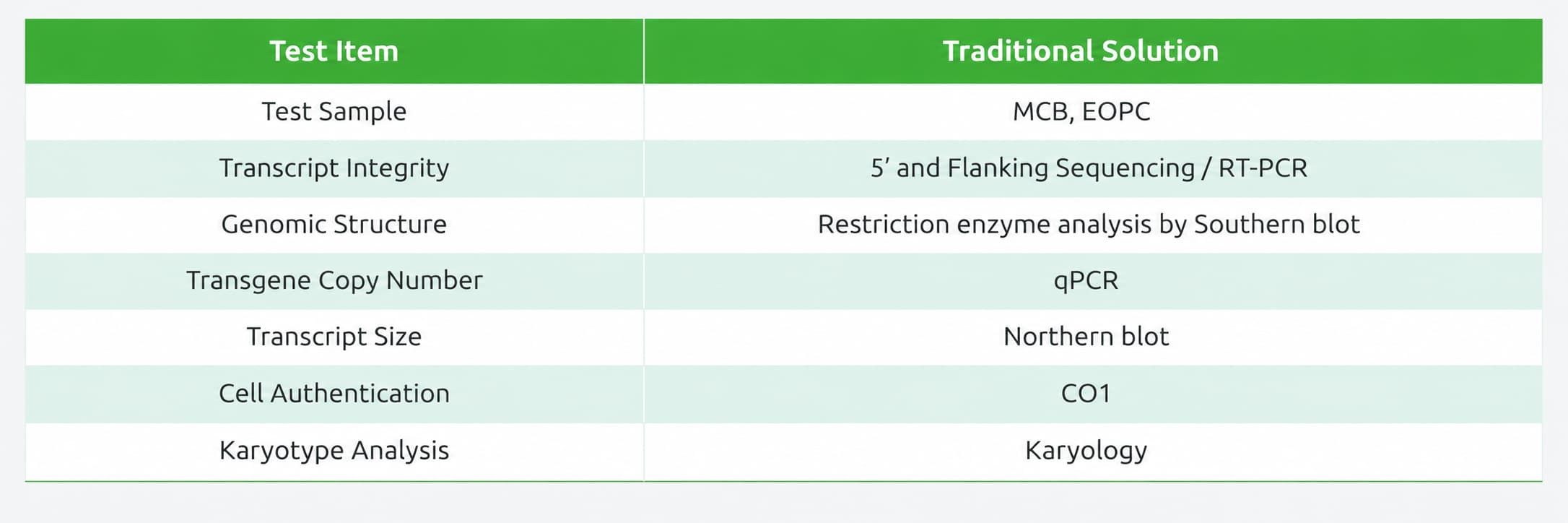
Depending on the characteristics of the production cell line and the recombinant construct, multiple complementary methods may be required to obtain sufficient information on transgene copy number, sequence integrity, integration sites, and other genomic characteristics.
In addition to conventional analytical methods, BRC Biotech has introduced Target Locus Amplification (TLA) technology from Cergentis, the Netherlands, to provide a more comprehensive solution for genetic characterization.
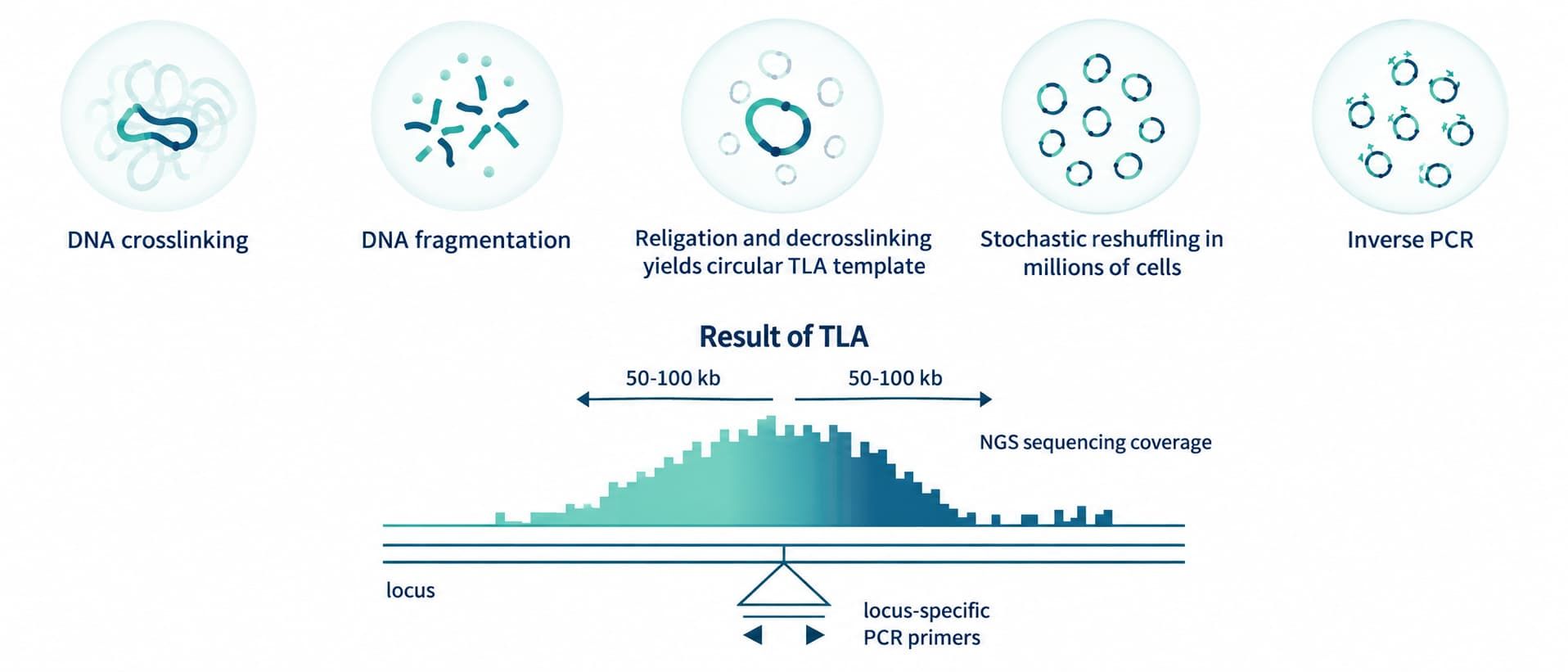
TLA enables targeted analysis of virtually any genomic locus. During the TLA workflow, DNA in the sample is crosslinked, fragmented, ligated, and de-crosslinked to generate a TLA amplification template. A TLA library is subsequently generated through inverse PCR, followed by Next-Generation Sequencing (NGS) and sequence analysis.
This approach allows comprehensive characterization of genomic regions associated with a specific target locus.
Most conventional techniques cannot provide all of the genetic characterization data required for stability assessment in a single experiment. As a result, multiple analytical approaches are often needed to characterize different aspects of a recombinant production cell line.
TLA-based analysis can generate, in a single experiment, much of the information that would otherwise require several conventional genetic stability assays. This provides significant advantages for comprehensive characterization of recombinant cell lines.
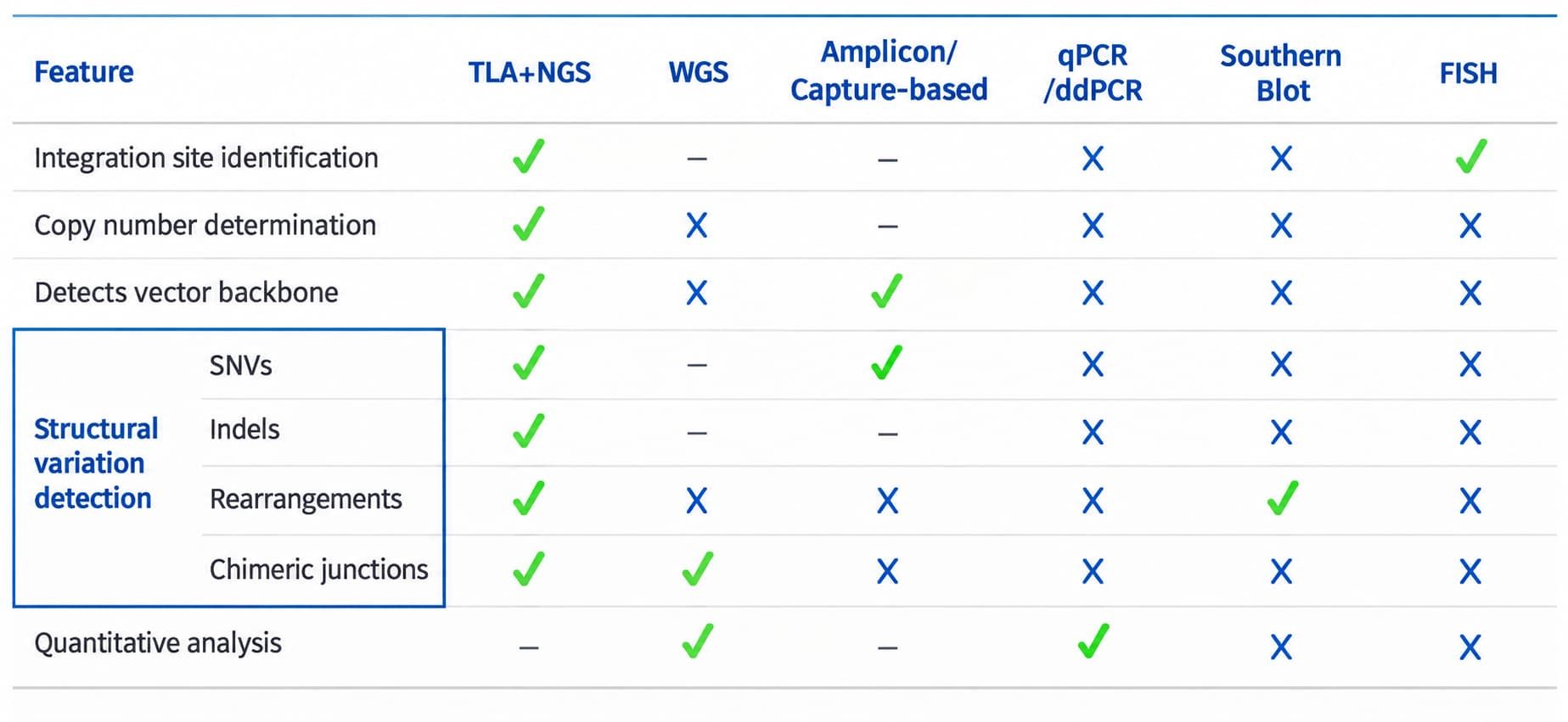
BRC Biotech currently provides both conventional genetic stability testing solutions and TLA-based genetic characterization services to support regulatory submissions and product development programs.
The genetic stability of CHO production cell lines is closely associated with consistent product quality. BRC Biotech provides comprehensive genetic stability analysis solutions for production cell lines, helping biotechnology and biopharmaceutical companies characterize their expression systems and support product quality throughout development and regulatory submission.
Customized analytical strategies are also available according to specific cell line characteristics, product types, and regulatory requirements.
Contact BRC Biotech to discuss a customized genetic stability analysis solution for your production cell line.
Paula J. P. de Vree et al. Targeted sequencing by proximity ligation for comprehensive variant detection and local haplotyping. Nature Biotechnology. 2014;32:1019–1025.
Jie Zhu, Diane Hatton. New Mammalian Expression Systems. Advances in Biochemical Engineering/Biotechnology. 2016;165:9–50.
Justin Eyquem et al. Targeting a CAR to the TRAC locus with CRISPR/Cas9 enhances tumour rejection. Nature. 2017;543:113–117.
Dan Boyd et al. Isolation and characterization of a monoclonal antibody containing an extra heavy-light chain Fab arm. mAbs. 2018;10(3):346–353.